
Just Dance 3
Dance to the rhythm of pop culture with improved gameplay mechanics and a five-star scoring challenge.

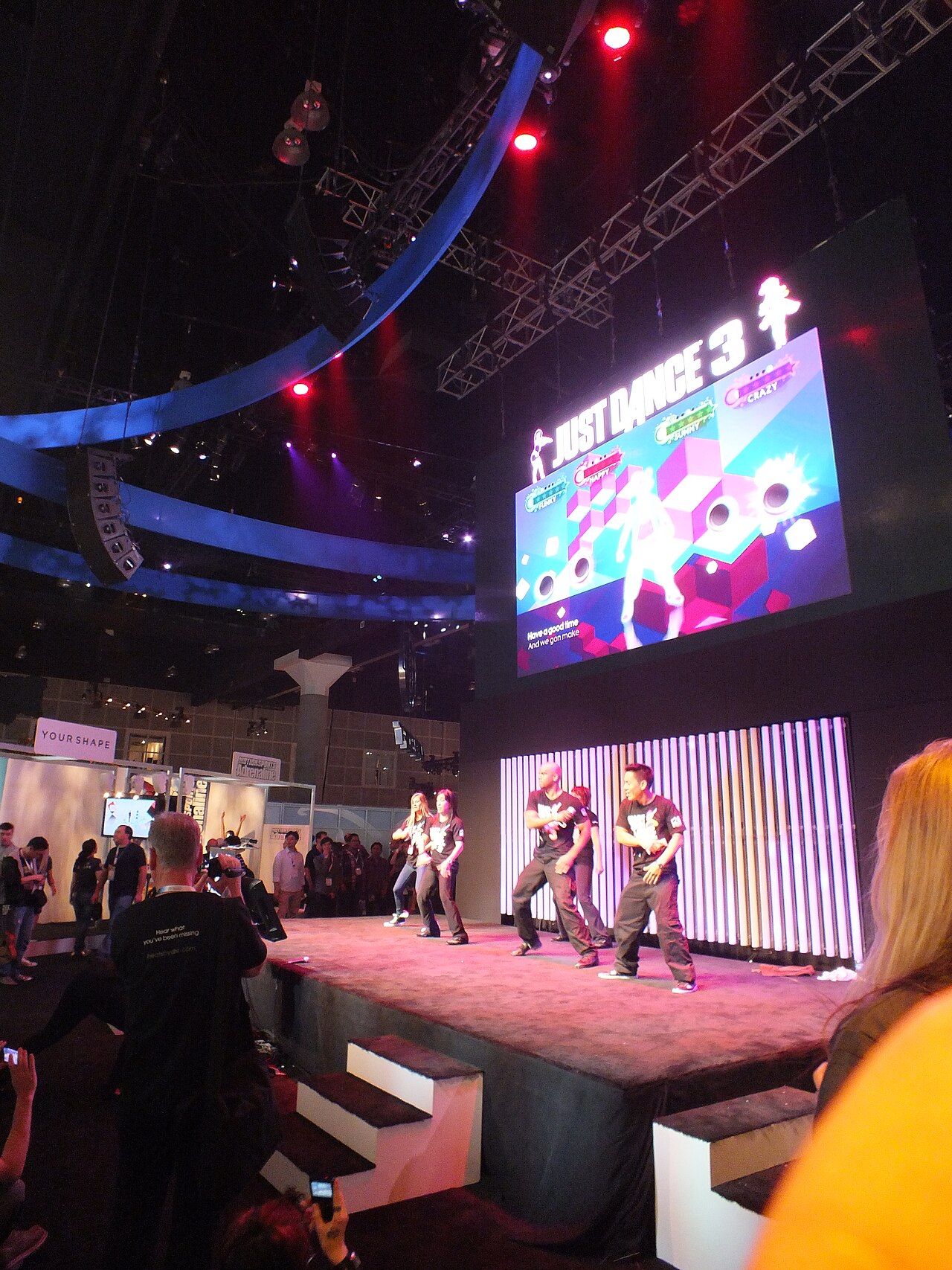
- EMR - from Chicago, USA · CC BY 2.0
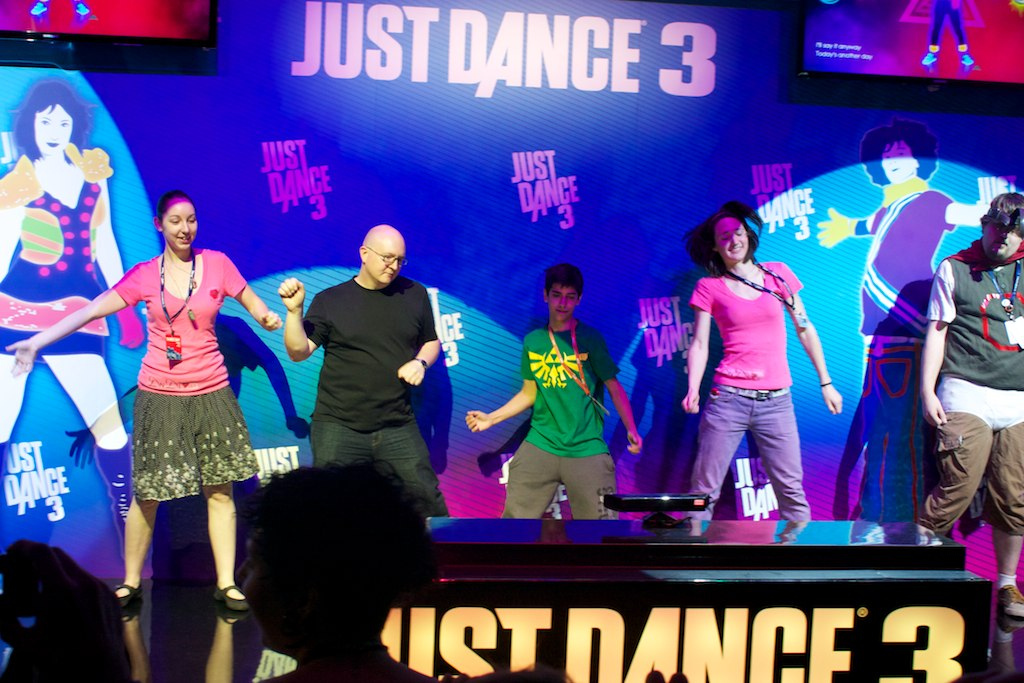
Just Dance 3 is a rhythm game developed by Ubisoft and released in late 2011 as the third main entry in the Just Dance franchise. It serves as a direct successor to Just Dance 2, expanding on the motion-controlled gameplay where players mimic on-screen avatars to popular music tracks. The title marked a significant shift for the series with its refined motion tracking and a broader selection of pop hits, though it did not include Disney songs.
- Developer
- Ubisoft
- Publisher
- Ubisoft
- Genre
- Rhythm / Dance
- Predecessor
- Just Dance 2
- Successor
- Just Dance 4
Lore & Background
The game introduced a refined scoring system that rewarded players with 1 to 5 stars per song, demanding greater precision and consistency. The environment is designed as an infinite party where the only limit is the player's stamina and rhythm. By integrating songs like 'I Kissed a Girl' and 'Firework', the game solidified its reputation as a family-friendly yet musically diverse experience, bridging the gap between casual gamers and dedicated dance enthusiasts.
In Their Own Story
The virtual lights dim as the familiar countdown begins, three seconds ticking away before the beat drops. A group of colorful avatars strikes a pose on the digital stage, their movements perfectly synchronized to the opening notes of a chart-topping hit. The player steps forward, controller in hand, feeling the rhythm pulse through the room as they attempt to mirror the choreography, chasing the elusive 'Perfect' score with every step.
Reader's Guide
This release marked the first time the franchise supported multiple console generations simultaneously on major platforms. Technically, the game introduced a new scoring system that replaced the simple 'Good/Perfect' bars with a more granular star rating based on timing accuracy. It also featured the first integration of Disney songs, significantly broadening the musical library compared to its predecessors. The franchise continued its momentum by launching an iOS version for mobile devices, allowing players to use their smartphones as controllers in conjunction with the console versions. This cross-platform capability was a major milestone that expanded accessibility beyond traditional motion-sensing hardware.
Did You Know?
- Just Dance 3 did not feature Disney songs; the first Just Dance game to include Disney tracks was Just Dance 2014.
- The game used a five-star scoring system (1-5 stars) for each song, not a three-star system.
- Just Dance 3 was released on Wii, Xbox 360, PlayStation 3, and Nintendo DS, but not on iOS platforms.
- Just Dance Unlimited was introduced in Just Dance 2016; Just Dance 3 did not have a precursor to that service.
Technological Catalysts and Market Context
The emergence of Just Dance was deeply rooted in the technological and cultural shifts of the mid-2000s. The introduction of motion-sensing hardware, specifically Nintendo's Wii Remote released in 2006, revolutionized how players interacted with software by replacing traditional joysticks with physical body movement. This innovation coincided with a massive surge in mainstream fitness culture, where gym memberships and dance-based exercise classes like Zumba saw exponential growth throughout the decade. Games such as Wii Sports had already demonstrated that video games could effectively integrate physical activity, responding to a growing consumer demand for active entertainment. The accessibility of these new controllers allowed the gaming demographic to expand significantly beyond traditional enthusiasts to include families, older adults, and casual players who had previously felt excluded from the industry. This convergence of motion technology and fitness trends created the perfect environment for a rhythm game that required physical mimicry rather than button mashing, paving the way for Ubisoft's successful entry into the market.
Core Mechanics and Player Interaction
At its heart, Just Dance is a motion-based experience where players must physically mirror choreography performed by on-screen dancers to a variety of classic and modern songs. The gameplay loop relies on visual cues; pictorials appear in the bottom right corner of the screen to guide the player's movements, while the system scores accuracy based on how closely the user follows the routine. To add depth to the challenge, specific sequences known as 'gold moves' require players to strike difficult poses or execute complex steps to earn bonus points, ultimately determining their final rank for the song. The series is highly adaptable regarding hardware, supporting motion controllers like the Wii Remote and PlayStation Move, camera-based systems such as Kinect, and even smartphone applications. While later entries allowed up to six simultaneous players on newer consoles and PC versions, earlier generations and specific controller configurations often limited sessions to four participants, ensuring a dynamic multiplayer experience that could be enjoyed by groups of varying sizes across different platforms.
The Just Dance 3 Milestone
Released on October 7, 2011, Just Dance 3 marked a pivotal expansion for the franchise following its announcement at the Ubisoft E3 conference in June. This installment was significant because it broke the series' previous exclusivity to Nintendo hardware by launching simultaneously on Xbox 360 and PlayStation 3 consoles. Crucially, this release leveraged the specific motion capabilities of these platforms, introducing support for Microsoft's Kinect sensor and Sony's PlayStation Move controller, thereby broadening the game's reach to a wider console audience. The soundtrack for Just Dance 3 featured over forty tracks from high-profile artists such as Jessie J, Katy Perry, Gwen Stefani, A-ha, Lenny Kravitz, and The Black Eyed Peas, alongside novelty acts like Robin Sparkles. By successfully porting the core dance mechanics to competing ecosystems without sacrificing the motion-control experience, this title solidified the series' status as a multi-platform phenomenon rather than a niche accessory for a single console family.
Series Evolution and Platform Diversity
Since its debut in November 2009 with hits from artists like MC Hammer and The Spice Girls, the Just Dance franchise has consistently evolved to match the lifecycle of gaming hardware. Each subsequent release, from Just Dance 2's record-breaking eight-player support to later entries hitting next-generation consoles, has expanded the library of available songs and technical capabilities. The series notably transitioned into the eighth and ninth generations with titles like Just Dance 2014 on Xbox One and PlayStation 4, eventually reaching Microsoft Windows via Steam and Ubisoft Connect in 2017. This PC release also coincided with the game's arrival on the Nintendo Switch, demonstrating an unprecedented level of cross-platform availability. Throughout its history, the series has maintained a consistent formula while updating its roster to include contemporary stars like Lady Gaga, Bruno Mars, and Dua Lipa, ensuring that the music remains relevant to new generations of players who utilize everything from dedicated motion controllers to mobile devices for navigation.
Gallery



Frequently Asked Questions
What is Just Dance 3?
Just Dance 3 is a rhythm game developed by Ubisoft in late 2011 that serves as the third main entry in the franchise. It challenges players to mimic on-screen avatars using motion controls across various consoles and mobile platforms.
How does gameplay work in this title?
Players must replicate dance moves shown by virtual dancers while matching the beat of popular music tracks. The game introduced a refined scoring system that rewards precision and timing more strictly than its predecessor.
What major content did Just Dance 3 introduce?
This release marked the first time the series included songs from the Disney canon, expanding its musical variety significantly. It also brought new gameplay mechanics to enhance the rhythm experience on all supported devices.
Why is Just Dance 3 considered important in the series history?
It bridged the gap between the early entries and future titles by modernizing the scoring system and diversifying the soundtrack with major brand partnerships. As the direct successor to Just Dance 2, it set new standards for motion-controlled dance games.
More in History & Releases
Elsewhere in the Just Dance universe
Spotted an error? Know more?
This is a living reference — every entry is fact-audited, and reader corrections feed straight into our audit queue. Suggest an edit · See this site's audit record