
Goofy
The lovable goofball joins the dance floor as a selectable player avatar.

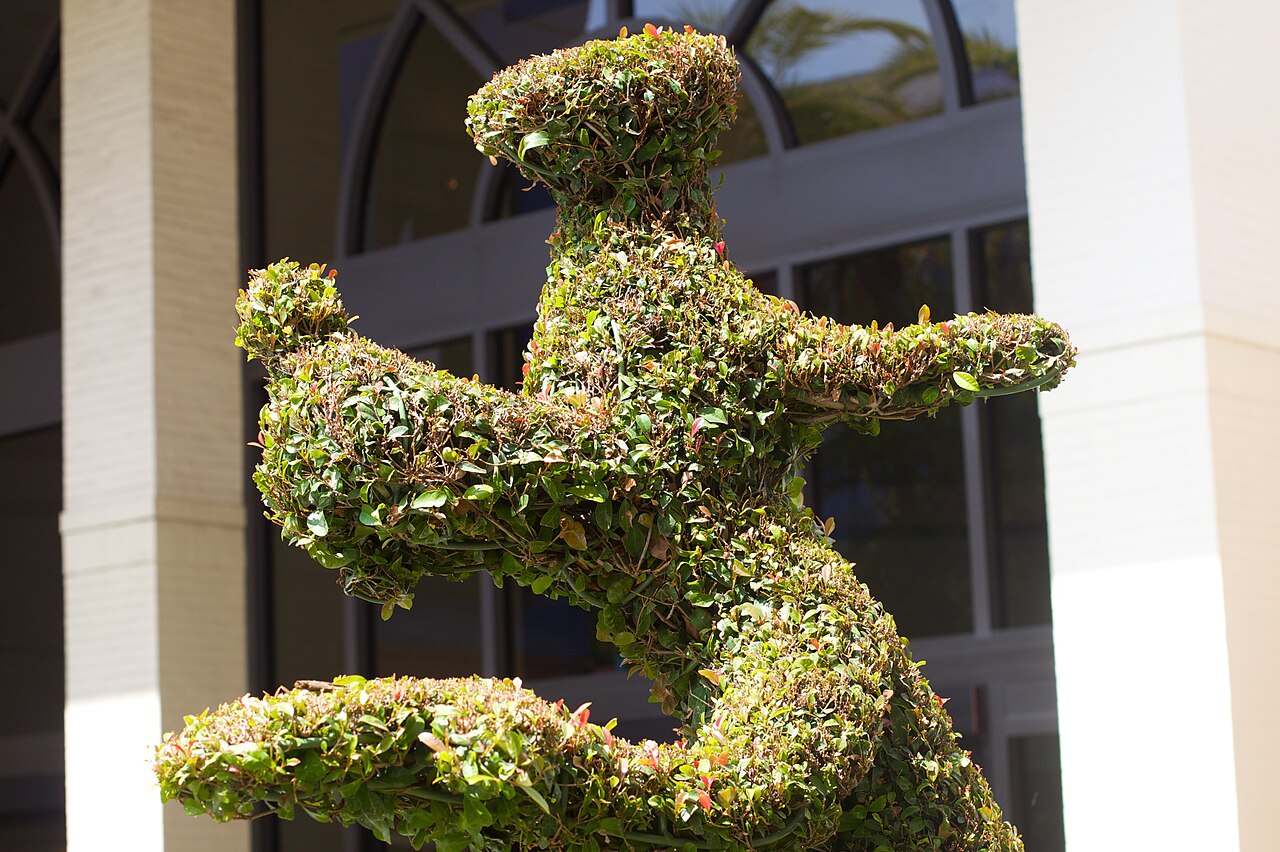
US Embassy · Public domain
Goofy is a cartoon character created by the Walt Disney Company. He is a tall, anthropomorphic dog who typically wears a turtle neck and vest, with pants, shoes, white gloves, and a tall hat originally designed as a rumpled fedora. Goofy is a close friend of Mickey Mouse and Donald Duck, and is Max Goof's father. He is normally characterized as hopelessly clumsy and dim-witted, yet this interpretation is not always definitive; occasionally, Goofy is shown as intuitive and clever, albeit in his own unique, eccentric way.
- Character Name
- Goofy
- Franchise Origin
- Disney
Verified Timeline
Lore & Background
Goofy debuted in animated cartoons, starting in 1932 with Mickey's Revue as Dippy Dawg, an older character who wears trousers and has a normal tail. Later the same year, he was re-imagined as a younger character in the short The Whoopee Party. During the 1930s, he was used extensively as part of a comedy trio with Mickey and Donald. Starting in 1939, Goofy was given his own series of shorts that were popular in the 1940s and early 1950s. Two shorts starring Goofy were nominated for an Oscar: How to Play Football (1942) and Aquamania (1961). He also co-starred in a short series with Donald, including Polar Trappers (1938), where they first appeared without Mickey Mouse. Three more Goofy shorts were produced in the 1960s after which Goofy was only seen in television and Disney comics. He returned to theatrical animation in 1983 with Mickey's Christmas Carol. His most recent theatrical appearance was the 2023 short Once Upon a Studio. Goofy has also been featured in television, most extensively in Goof Troop (1992), House of Mouse (2001–2003), Mickey Mouse Clubhouse (2006–2016), Mickey Mouse (2013–2019), Mickey and the Roadster Racers / Mickey Mouse Mixed-Up Adventures (2017–2021), Mickey Mouse Funhouse (2021–2025) and Mickey Mouse Clubhouse+ (2025–present).
In Their Own Story
Originally known as Dippy Dawg, the character is more commonly known simply as "Goofy", a name used in his short film series. In his 1950s cartoons, he usually played a character called George G. Geef. Sources from the Goof Troop continuity give the character's full name as G. G. "Goofy" Goof, likely in reference to the 1950s name. In many other sources, both animated and comics, the surname Goof continues to be used. In other 2000s-era comics, the character's full name has occasionally been given as Goofus D. Dawg. In the comics and his pre-1992 animated appearances, Goofy was usually single and childless. Unlike Mickey and Donald, he did not have a steady girlfriend. The exception was the 1950s cartoons, in which Goofy played a character called George Geef who was married and at one point became the father of a kid named George Junior. In the Goof Troop series (1992–1993), however, Goofy was portrayed as a single father with a son named Max, and the character of Max made further animated appearances until 2004. This marked a division between animation and comics, as the latter kept showing Goofy as a single childless character, excluding comics taking place in the Goof Troop continuity. After 2004, Max disappeared from animation, thus removing the division between the two media. Goofy's wife was never shown, while George Geef's wife appeared—but always with her face unseen—in 1950s-produced cartoon shorts depicting the character as a "family man".
Reader's Guide
Goofy's catchphrases are "gawrsh!" (which is his usual exclamation of surprise and his way of pronouncing "gosh"), along with "ah-hyuck!" (a distinctive chuckle) that is sometimes followed by a "hoo hoo hoo hoo!", and especially the Goofy holler (YAAA-HOO-HOO-HOO-HOOEEEEY!). In the classic shorts, he would sometimes say "Somethin' wrong here" (first heard in Lonesome Ghosts) whenever he suspected something was not right about the situation he was currently in, or sing a few bars of "The World Owes Me a Livin'" from the Silly Symphonies cartoon The Grasshopper and the Ants (the first instance of Goofy singing this song is On Ice). In The Grasshopper and the Ants, the Grasshopper had an aloof character similar to Goofy and shared the same voice actor (Pinto Colvig) as him. The character of Goofy originated with his voice actor, a former circus and vaudville actor, comedian, clown and chalk talk artist Pinto Colvig, who began working as a story man for the Disney Studio in 1930. According to Colvig, one day in 1931, he was having a conversation with Walt Disney and director Wilfred Jackson, and began to reminisce about "…a grinny, half-baked village nitwit back in my hometown whose mannerisms I had copied and used for one of my former stage characters, The Oregon Appleknocker." Colvig later identified this "village nitwit" as a local flagman that worked at Jacksonville, Oregon's main railroad crossing, who he described as a "...slow-minded guy who is the happiest fellow in the world. Each small town has one, and he always seems to hang around the depot... As a youngster I used to watch every train come in, and I knew all the details and peculiarities of that flagman's life. I impersonated that man for Disney, not in jest, but because I admired him and his simplicity. I always laughed with him rather than at him." Walt Disney was captivated by Colvig's impersonation and, eager to expand his cast of recognizable characters, decided to develop a new character around Colvig's former stage routine for Mickey's ever-growing roster of supporting players. The next day, Colvig went in front of a microphone and camera and started acting out the loose ungainly mannerisms of his Oregon Appleknocker persona, while animator Tom Palmer sketched out a character based on his performance. "Thus 'Goofy, the Guy with a Silly Laugh' was hatched", as Colvig would later declare with pride. The character first appeared in Mickey's Revue, released on May 25, 1932. Directed by Jackson, the short features Mickey Mouse, Minnie Mouse, Horace Horsecollar and Clarabelle Cow performing a song and dance show: a typical Mickey cartoon of the time. What set this short apart was the appearance of a new character: a dog-like member of the audience who constantly irritates his fellow spectators by noisily crunching peanuts and laughing loudly (the laugh being provided by Colvig) until two of those fellow spectators knocked him out with their mallets, before revealing they have the same exact laugh. This early version of Goofy was named Dippy Dawg by Disney artist Frank Webb and was depicted as an old man with a white beard, a puffy tail, and no trousers, shorts, or undergarments. A considerably younger and more refined version of the Dippy Dawg character next appeared in The Whoopee Party (released on September 17, 1932) this time as a party guest and a friend of Mickey and his gang. Dippy Dawg made a total of six appearances between 1932 and 1933, but most of them were mere cameos. By his seventh appearance, in Orphan's Benefit (released on August 11, 1934), he gained the new name "Goofy", but was still considered a minor character. Inspired by popular comedy trio acts of the era – such as The Three Stooges and The Marx Brothers – Walt Disney and his storymen decided to team Mickey, Goofy and the newly popular character of Donald Duck together in a cartoon entitled Mickey's Service Station: directed by Ben Sharpsteen and eventually released on March 16, 1935. In mid-1934, Walt held a story meeting for Mickey's Service Station where he and Sharpsteen began assigning animators to specific sequences. One of the animators assigned to the short, Art Babbitt, took a particular liking to a sequence with Goofy. "I had to fight for that..." Babbitt remembered years later: "... in it [Mickey's Service Station] there's a small sequence of Goofy on this cylinder block of a car. And he reaches down in one of the holes of the cylinder block and his own hand comes up behind him. God, I wanted that... Walt was in this story meeting and I said, 'Gee I want that.' [Walt said] 'Nah, I've got you scheduled to do Pete, Pegleg Pete'. I said 'I'll do Pegleg Pete, but give me Goofy, too.' And so that was the final deal, I'd do Pegleg Pete and get Goofy for dessert. Goofy was originally a sort of stock character in mob scenes, so on, but nobody attempted to do anything with him, so I can't say that I created Goofy, but I was the first that made him into a character. I liked the character, there was all sorts of possibilities." Babbitt's scene with Goofy was originally timed to be 7 feet of film (just over 4 seconds); however, Babbitt padded his scene adding additional bits of comic business, with the final scene being 57 feet (38 seconds) long. Sharpsteen was furious that Babbitt had gone over his allotted time without permission, but Walt was impressed by Babbitt's work and approved his scene.
Did You Know?
- Goofy debuted in 1932 as Dippy Dawg in Mickey's Revue, an old man with a white beard, wearing trousers and a normal tail.
- Two shorts starring Goofy were nominated for an Oscar: How to Play Football (1942) and Aquamania (1961).
- Goofy's catchphrases include 'gawrsh!', 'ah-hyuck!', and the Goofy holler (YAAA-HOO-HOO-HOO-HOOEEEEY!).
- The character originated from voice actor Pinto Colvig's impersonation of a slow-minded flagman from Jacksonville, Oregon's main railroad crossing.
- Art Babbitt padded his Goofy scene in Mickey's Service Station from 7 feet of film (just over 4 seconds) to 57 feet (38 seconds), which Walt Disney approved.
Gallery
Frequently Asked Questions
Who is Goofy in Just Dance?
He is a playable avatar representing his iconic role as a Disney character within the game's roster of licensed figures. Players select him to appear on screen instead of the default dancer during gameplay.
What are Goofy's powers or role?
As an Avatar, he does not perform original choreography but serves as a customizable player representation available during specific song selections. He mirrors the movements required by the current track when chosen from the selection screen.
How do players unlock Goofy?
His status is listed as available in select titles and updates through unlockable content packs. Access relies on licensing agreements managed by Disney Interactive for this specific inclusion.
Why is Goofy important to the roster?
His inclusion allows players to embody one of Mickey Mouse's most famous friends while following on-screen dance routines. This partnership often involves Club Penguin alongside standard Disney Interactive licensing deals.
Does Goofy have a unique story ending?
No, he does not possess a narrative arc because his function is strictly as a character skin for player customization. The lovable goofball joins the dance floor solely to enhance the visual experience of the game.
More in Dancers & Avatars
Elsewhere in the Just Dance universe
Spotted an error? Know more?
This is a living reference — every entry is fact-audited, and reader corrections feed straight into our audit queue. Suggest an edit · See this site's audit record